
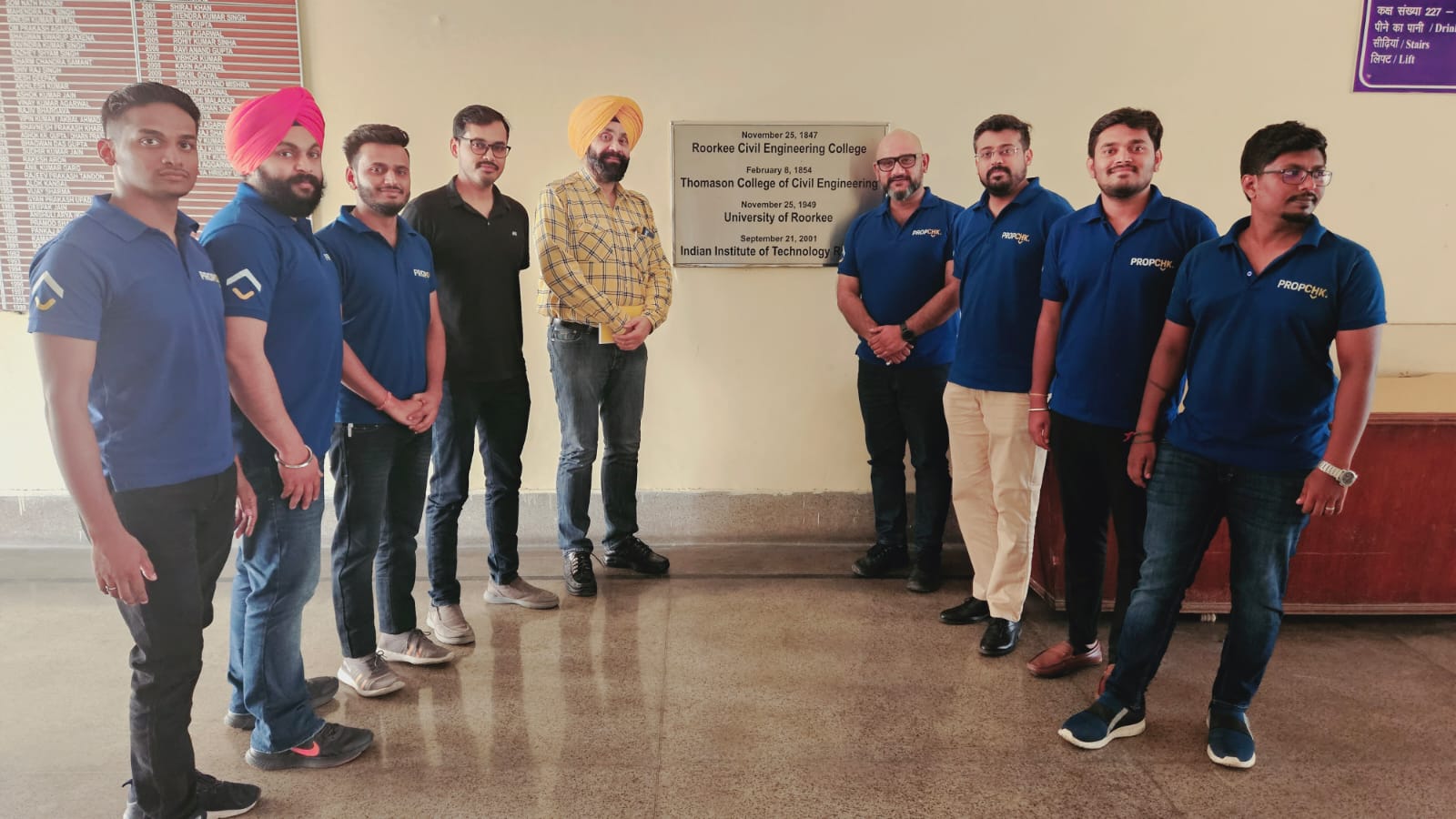
The Indian real estate industry has evolved rapidly over the last decade. Residential projects today are bigger, smarter, faster, and far more technology-driven than ever before. Buyers have become more aware, more informed, and significantly more conscious about quality before investing their life savings into a home.
Yet somewhere behind the polished sample flats, premium brochures, and glossy possession handovers, one critical question has continued to quietly exist in the background:
How is construction quality actually being measured?
Not visually.
Not emotionally.
But technically.
Because despite the scale at which Indian real estate has grown, one important aspect of the industry has remained surprisingly unstructured — standardized home inspection practices.
And perhaps that becomes most visible only after possession.
A wall that looked perfect under warm lighting suddenly develops damp patches weeks later. Flooring that appeared level starts revealing unevenness during daily use. Minor plumbing issues slowly turn into recurring repairs. In many cases, the problem isn’t just the defect itself — it’s the absence of a clear benchmark that defines what should have been acceptable in the first place.
For years, this space has operated in a grey zone between experience, judgement, and interpretation.
Which is exactly why the collaboration between PropChk and IIT Roorkee has started drawing attention within the industry. Not merely because it brings together a home inspection company and one of India’s leading engineering institutions — but because it raises a much larger possibility:
Can home inspection in India move from observation-based practices to engineering-backed standards?
(Reference article: https://www.rprealtyplus.com/allied/propchk-iit-roorkee-collaborate-for-home-inspection-standards-111354.html)
The Gap That Has Always Existed in Indian Homebuying
Most homebuyers are not trained to identify construction defects.
And realistically, they shouldn’t have to be.
When buyers visit a property during possession, the process is usually limited to a quick walkthrough. Lights are switched on. Doors are opened and closed. Paint finish is checked. Taps are tested for a few seconds.
If everything looks fine, the property is assumed to be ready.
But construction quality rarely reveals itself immediately.
Many defects begin appearing only after weeks or months of actual usage:
- Hollow tiles beneath flooring
- Water seepage near bathrooms or balconies
- Improper floor slopes
- Plumbing leakages
- Electrical issues
- Misaligned doors and windows
- Dampness hidden behind freshly painted walls
The issue becomes even more complicated because there is often no universally accepted reference point to evaluate whether these defects fall within acceptable quality limits.
One engineer may call something minor workmanship variation. Another may classify the same issue as poor execution.
That inconsistency is where the larger problem begins.
Why Standardization Matters More Than Ever
As Indian real estate matures, buyers are no longer evaluating projects only based on location or amenities. Quality expectations have changed significantly.
People now ask:
- Is the workmanship reliable?
- Has the property been technically inspected?
- Are there hidden issues before possession?
- Is there any measurable quality benchmark?
This shift is important because it reflects a growing demand for accountability in residential construction.
In industries like automobiles, electronics, aviation, or manufacturing, quality standards are clearly defined. Products are tested against measurable benchmarks before reaching consumers.
But in residential real estate — despite homes being one of the largest financial investments people make — inspection practices have largely remained fragmented.
That is the larger industry gap this collaboration attempts to address.
The PropChk and IIT Roorkee Collaboration
PropChk, through years of property inspections across Indian cities, has built extensive practical understanding of recurring construction quality issues found during handovers and post-possession inspections.
At the same time, it became increasingly clear that India required inspection standards designed specifically around its own construction ecosystem.
This led to the collaboration with IIT Roorkee — one of India’s most respected institutions in civil engineering and construction research.
The significance of this partnership lies not just in the association itself, but in the intent behind it.
The objective is to work toward:
- Structured inspection methodologies
- Standardized inspection checklists
- Defined tolerance levels
- Consistent quality evaluation practices
- Scientifically backed inspection frameworks relevant to Indian construction
In simpler terms, the effort is aimed at bringing more clarity into an area that has historically depended heavily on subjective judgement.
Why Imported Standards Alone Cannot Solve Indian Challenges
One of the most important aspects of this initiative is its focus on Indian construction realities.
Construction environments in India differ significantly from western countries where home inspection systems are already mature.
Climate conditions vary drastically across regions. Material quality differs across projects. Labor practices, site execution methods, and finishing standards are often inconsistent.
A framework designed for homes in North America may not always translate effectively to residential projects in Gurgaon, Bangalore, Mumbai, or Chennai.
For example:
- Coastal regions face different moisture-related issues
- Waterproofing failures behave differently across climates
- Tile and flooring workmanship standards vary
- Plumbing and drainage challenges are project-specific
- Finishing quality often depends heavily on on-site supervision
This is why localized inspection frameworks become critical.
The PropChk and IIT Roorkee collaboration focuses on developing standards that are technically sound while still being practical for Indian residential conditions.
The Role of Technology in Modern Home Inspections
Home inspections today are evolving beyond basic visual observations.
Modern inspection processes involve tools and testing methods that help identify hidden defects more accurately.
PropChk uses multiple technology-driven inspection techniques, including:
- Moisture detection equipment
- Laser leveling tools
- Electrical testing devices
- Hollow tile detection methods
- Digital inspection reporting systems
These tools improve documentation accuracy and help homeowners better understand the actual condition of the property.
But tools alone are not enough.
A moisture meter may detect dampness. A laser level may identify uneven flooring. But without defined benchmarks, one important question still remains:
What level of variation is actually acceptable?
That is where standardization becomes powerful.
Because technology becomes truly effective only when paired with structured engineering-based evaluation systems.
A Shift That Could Influence the Entire Industry
Interestingly, the impact of standardized inspections extends far beyond homebuyers alone.
For developers and builders, clearer quality benchmarks can help improve consistency, reduce disputes, and build stronger trust with customers.
For inspection professionals, structured standards create better clarity and reduce subjectivity.
For the broader real estate sector, it encourages a culture where quality becomes measurable rather than interpretational.
As competition in the housing market increases, construction quality is slowly becoming a major differentiator. Buyers are beginning to evaluate projects not just by design and marketing, but by execution quality and long-term reliability.
This shift is likely to make professional home inspections a far more integral part of the homebuying process in the coming years.
Looking Ahead
The collaboration between PropChk and IIT Roorkee represents more than an industry partnership. It reflects a larger transition happening within Indian real estate itself.
A transition from assumption to verification.
From visual satisfaction to technical assessment.
From opinion-based inspection practices to more structured and engineering-backed quality evaluation.
India’s housing market is expanding rapidly, but with that growth comes the need for greater accountability, stronger quality systems, and better consumer confidence.
Standardized home inspection may still be an evolving space today, but initiatives like this indicate where the future of Indian real estate is heading.
And perhaps for the first time, the conversation around home quality is beginning to move beyond what buyers can see — toward what can actually be measured.