
Buying a home is probably the biggest financial decision you’ll ever make. So it’s a little surprising how many people skip the one step that could save them lakhs — or prevent a disaster entirely.
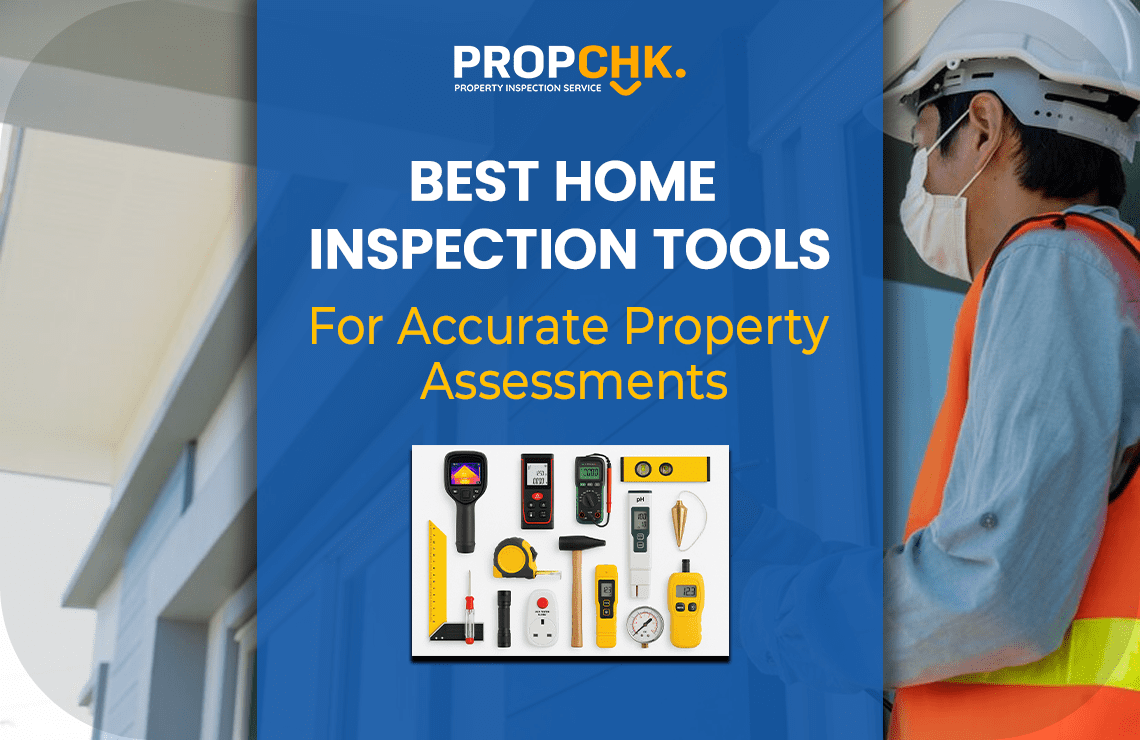
A proper home inspection isn’t just paperwork. It’s a trained professional, armed with the right equipment, going through your prospective property with a fine-tooth comb. And the tools they carry make all the difference.
At PropChk, we get asked all the time: “What exactly do your inspectors look for — and how?” So we put this guide together to answer that honestly, without the jargon.
The Tools That Actually Matter
Moisture Meters — Finding the Water You Can’t See
Water damage is sneaky. By the time you spot a damp patch or a musty smell, the problem has usually been brewing behind your walls for months. Moisture meters let our inspectors detect elevated moisture levels inside walls, under floors, and above ceilings — long before the damage becomes visible.
This matters because mould, rot, and structural weakening all start with water. Catching it early is the difference between a minor repair and a major renovation.
Thermal Imaging Cameras — Seeing Through Walls (Sort Of)
These are exactly as cool as they sound. Thermal cameras pick up temperature differences across surfaces, which can reveal things completely invisible to the naked eye — gaps in insulation, hidden leaks, and electrical components that are running hotter than they should.
The best part? They’re non-invasive. Our inspectors can scan an entire room without touching a single wall. That means a thorough assessment without any damage to the property.
Digital Multimeters — Because Electrical Problems Don’t Announce Themselves
Faulty wiring is one of the leading causes of house fires in India — and one of the most common things buyers overlook during a property visit. A digital multimeter measures voltage, resistance, and current in electrical systems, allowing our inspectors to verify that everything is wired correctly and within safety limits.
It’s not glamorous equipment, but it might be the most important tool in the kit.
Drones — Safe Roof Inspections Without the Ladder Risk
Inspecting a roof used to mean sending someone up a ladder with a clipboard and hoping for the best. Drones changed that. Our inspectors can now capture detailed aerial footage of rooftops, gutters, and hard-to-reach facades without putting anyone at risk.
For multi-storey buildings, large commercial properties, or anywhere access is tricky, drones give us a level of detail that simply wasn’t possible before.
A Few Other Tools Worth Mentioning
Beyond the four above, our inspectors routinely use:
- Borescopes — a small camera on a flexible cable, used to inspect inside walls, pipes, and tight cavities
- Electrical circuit testers — for quick safety checks on sockets and consumer units
- Foundation crack monitors — to track whether any cracks in the structure are stable or actively widening
Why Not Just Do It Yourself?
DIY inspection checklists have their place — if you’re doing a quick once-over before arranging a professional visit, fair enough. But they can’t replicate what a trained inspector with calibrated equipment can find.
Here’s what a professional inspection actually gives you:
- An objective, documented record of the property’s condition — useful for negotiations and insurance
- Detection of issues that aren’t visible without specialist tools
- A full review of electrical, plumbing, and HVAC systems
- Peace of mind that you’re not walking into a money pit
Our recommendation: for existing homeowners, get an inspection every three to five years. For buyers, always commission one before you sign anything.
How PropChk Does It Differently
We’re not going to pretend every inspection company does the same thing — they don’t.
PropChk operates as an independent, third-party inspection body. That means we’re not affiliated with any developer, agent, or seller. Our only obligation is to give you an accurate picture of the property.
We’re also recognised by the Indian Green Building Council (IGBC), which means our inspections meet rigorous environmental and safety standards.
Our reports go beyond the standard checklist. They include thermal imaging data, 3D mapping where applicable, and AI-assisted maintenance forecasting — so you don’t just learn what’s wrong today, but what might need attention in the coming years.
We cover residential, commercial, and industrial properties, with dedicated services in all major cities across India.
The Technology Is Getting Better — Fast
The inspection industry is genuinely exciting right now. AI-powered analytics are starting to be integrated into assessment platforms, making it possible to predict likely maintenance issues based on current structural data — not just flag existing problems.
At PropChk, we invest in keeping our tools and methods current. Our clients should always be getting the most accurate, up-to-date assessment available.
Questions We Get Asked a Lot
What tools do professional home inspectors use?
The essentials are moisture meters, thermal imaging cameras, digital multimeters, and drones. Beyond those, our inspectors carry borescopes, circuit testers, and foundation monitors. Everything is backed by our reporting software, which ties all the findings into a clear, readable document.
How often should I get my home inspected?
Every three to five years if you already own a home. Before purchase, without exception. Regular inspections catch small problems while they’re still cheap to fix.
Will the tools catch every structural problem?
They’ll find the vast majority of issues — structural, electrical, moisture-related. But the technology works best alongside experienced human judgement. Our inspectors are trained to notice things that sensors and cameras can miss. It’s always a combination of both.
Why PropChk specifically?
Honestly? Because we show our work. Our reports include thermal images, 3D data, and maintenance forecasting — not just a checklist. We’re independent, IGBC-recognised, and we cover the whole country. If you want a second opinion on a property, we’re the right call.
Thinking about buying a property — or just overdue for an inspection?
Get in touch with the PropChk team. We’ll tell you exactly what we’d look for — and what we find.